
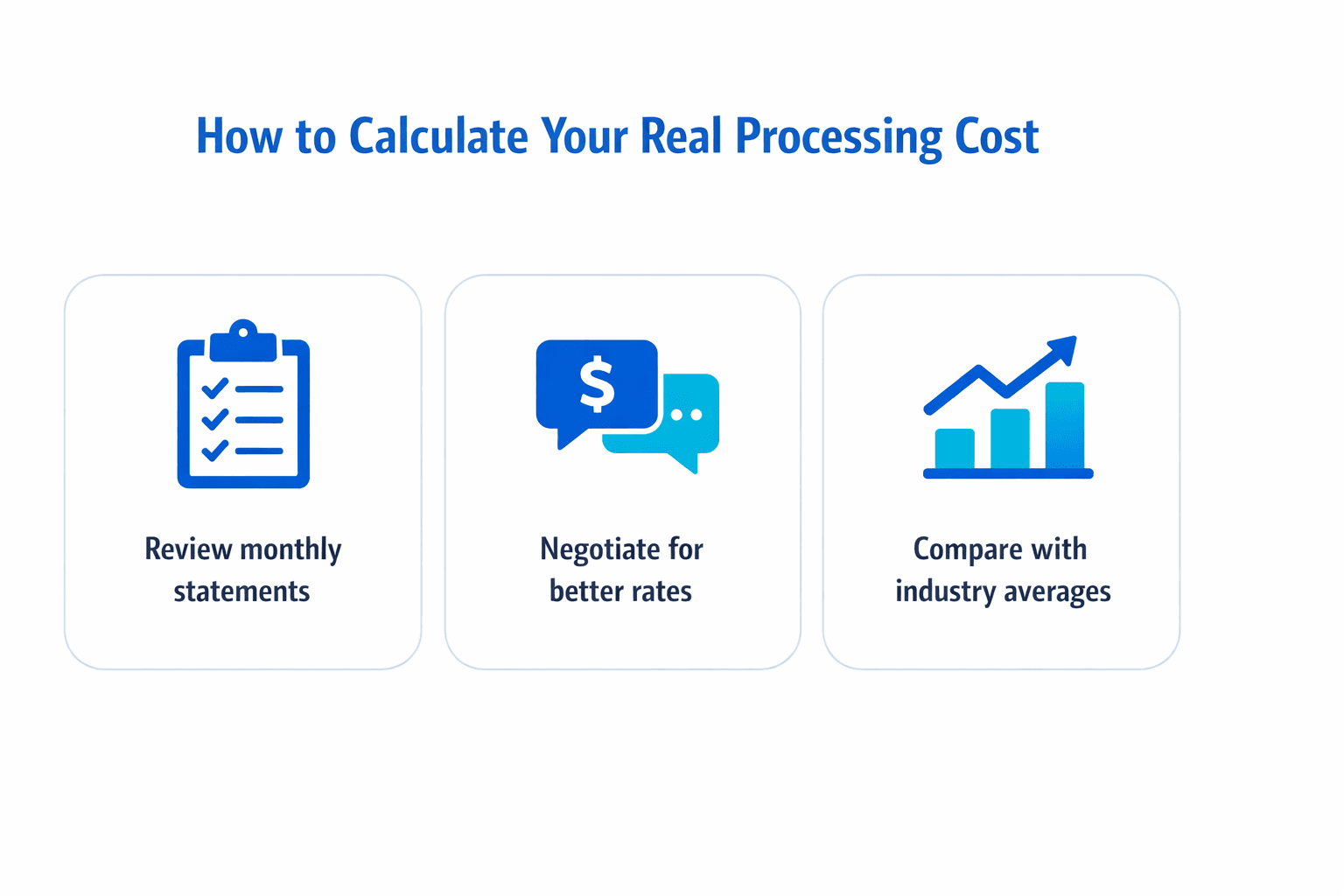
How to Calculate Your Real Processing Cost
Understanding your real payment processing costs can save your business money and improve your bottom line. This guide walks you through the calculation process.
What It Means
Your real processing cost refers to the total expenses associated with accepting payments, including merchant fees, transaction costs, and any hidden charges. This figure goes beyond the basic percentage rates and flat fees presented by payment processors. It encompasses all costs incurred from the moment a customer pays until the funds are deposited into your account.
For example, if your processor charges a 2.5% fee on sales, you might think your cost is just that percentage. However, additional costs like monthly fees, chargeback fees, and foreign transaction fees can significantly increase your total processing cost.
Why It Matters
Understanding your real processing cost is critical for effective budgeting and pricing strategies. If you know the true cost of accepting payments, you can make informed decisions about pricing your products or services, which ultimately impacts your profitability.
For instance, if you realize that your real processing cost is 4% instead of the expected 2.5%, you may need to adjust your pricing to maintain your profit margins. Additionally, recognizing these costs helps in identifying areas where you can negotiate better rates or switch providers to save money.
How To Check
Start by reviewing your monthly statements from your payment processor. Look for any additional fees that may not be immediately obvious. Make a list of all the fees and charges associated with your account, including transaction fees, monthly fees, chargeback fees, and any other costs.
Next, calculate your total processing costs by dividing the total fees by your total sales volume. For example, if you paid $1,000 in fees for $20,000 in sales, your real processing cost would be 5%. This simple calculation can reveal whether you are spending more than necessary on payment processing.
What To Ask Your Provider
- 1. What are the exact fees associated with each transaction type?
- 2. Are there any hidden fees that I should be aware of?
- 3. How does your pricing structure compare to competitors?
- 4. Can you provide a detailed breakdown of my monthly statement?
- 5. What are the terms regarding chargebacks and refunds?
- 6. Are there discounts available for higher volume transactions?
- 7. What is your policy on international transactions and associated fees?
Common Mistakes
Overlooking hidden fees in monthly statements.
Comparing only percentage rates without additional fees.
Failing to negotiate with providers.
Not tracking chargebacks effectively.
Neglecting to adjust pricing strategies based on processing costs.
Action Checklist
Review your payment processor's monthly statements for all fees.
Create a detailed list of all processing costs and charges.
Calculate your real processing cost percentage.
Compare your costs with industry averages.
Negotiate with your payment provider for better rates.
Consider switching providers if costs are too high.
Implement a strategy for pricing your products or services based on real costs.
Monitor your payment processing costs regularly to ensure competitiveness.
FAQ
It is the total cost incurred from accepting payments, including all fees and charges.
Want to know what applies to your business?
Run your free PAYTH Assessment and get practical recommendations tailored to your business type.